Moving from a personal Gmail account to a professional Google Workspace setup is a big step for any growing business, freelancer, or brand. A custom domain email instantly makes your business look more credible and gives you access to a full suite of powerful collaboration tools.
But when it comes to transferring your old emails and data, the process is no longer as simple as it used to be. Older methods—like Gmail’s classic POP3 mail fetcher—are being phased out as Google tightens its security standards. On top of that, manual IMAP syncing through desktop apps often runs into strict bandwidth limits, slowing the migration process and increasing the risk of incomplete transfers.
To make the switch smoothly and securely, you need a modern migration method that works with Google’s latest security requirements. In this guide, we’ll walk you through the safest and most reliable ways to migrate from personal Gmail to Google Workspace—including Google’s built-in Data Migration Service (DMS) and other professional solutions—so you can move your emails, labels, and folders without losing a single message.
Different ways to migrate Gmail to Google Workspace account
Users have various solutions to perform the Gmail to Google Workspace migration task. Google offers a native solution to complete this task with the help of Google Admin Console. Another method is the professional third-party tool to accomplish this migration process. Now, we will learn both methods’ stepwise procedure to do this task.
Method 1: Migrate Gmail to Google Workspace Using Professionally
Every user wishes to have a reliable way to complete the migration of their Gmail account to G Suite. That is why we offer the Shoviv IMAP to Google Workspace Migration Tool for users to do this process. It easily moves various accounts at a time to a G Suite account with no size restrictions. Users can also migrate personal Gmail to Google Workspace mailboxes without any issues. This software also provides the filter option to add or remove items using the date range and folder criteria.
It comes with a simple working procedure, which makes it easily understandable to all. Moreover, it preserves the data’s originality during the Gmail to G Suite migration process. Every user can smoothly run this task with the help of this tool; even new users can also run this task easily.
Steps for the Gmail to Google Workspace migration
To know how to migrate Gmail to Google Workspace mailboxes, you need to follow the below steps.
- Open the Software.
- Connect the source and the target.
- After that, create a migration job.
- Add mailboxes and filter items if needed.
- Review the migration settings.
- Finally, click the Finish to migrate Gmail to G Suite mailboxes.
Detailed procedure to move Gmail emails to Google Workspace
Here, we will give you the complete stepwise procedure of the Shoviv professional tool to migrate Gmail to Google Workspace mailboxes. Users need to understand the below steps to know the path to move from Gmail account to G Suite.
- Open the Shoviv IMAP to Google Workspace Migration Tool.
- Then, click the Source Connection tab and hit the (+) button to create a new one.
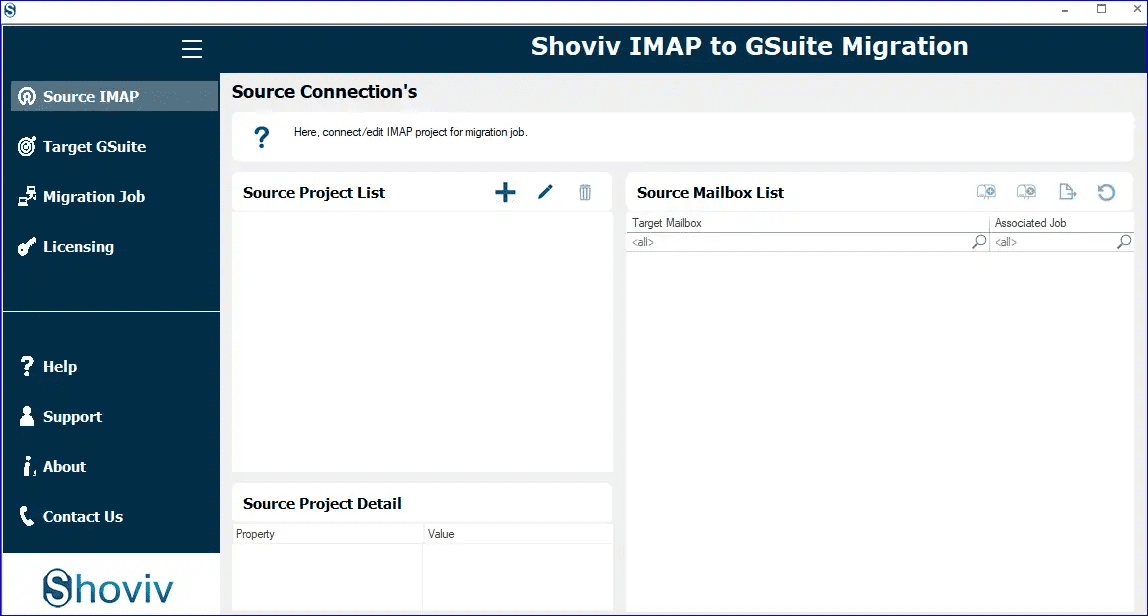
- Now, you need to tap on the Add button.
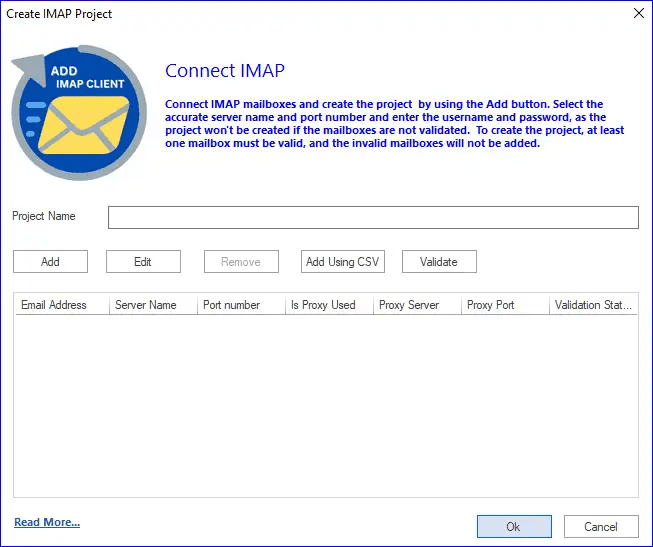
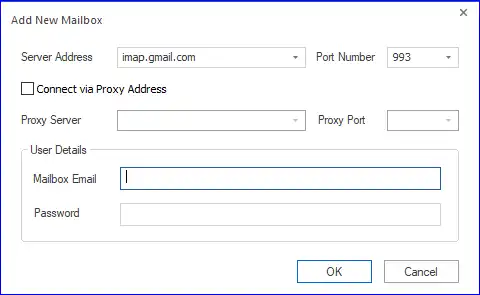
- After that, enter the needed details to connect to IMAP and click OK.
- Hit the Target G Suite tab and move with the (+) button to connect the target.
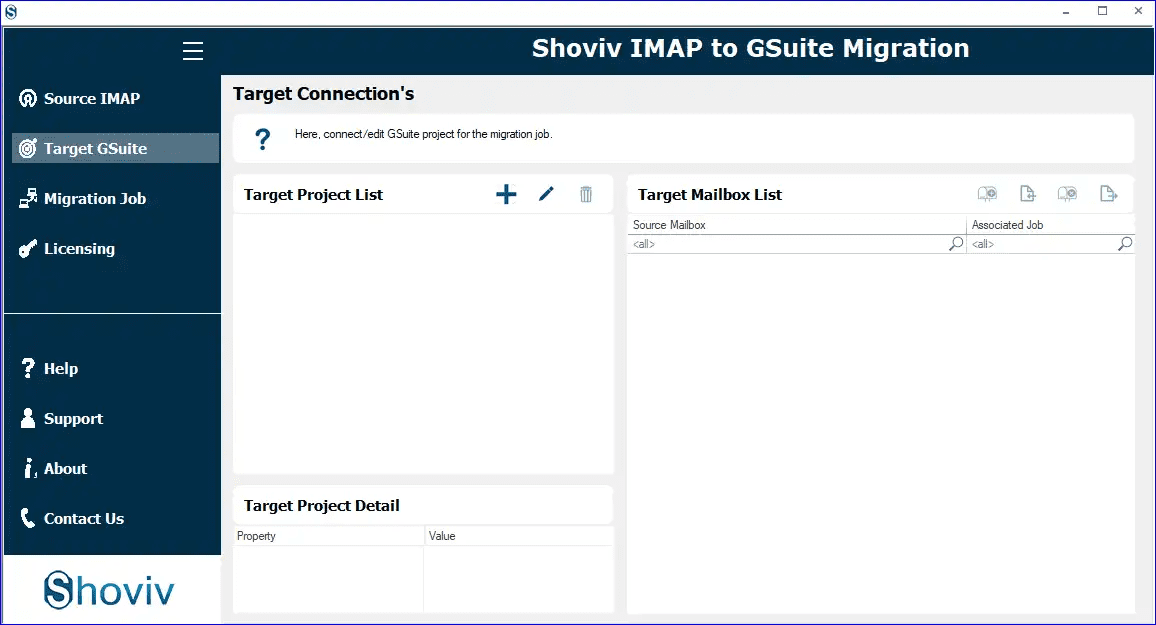
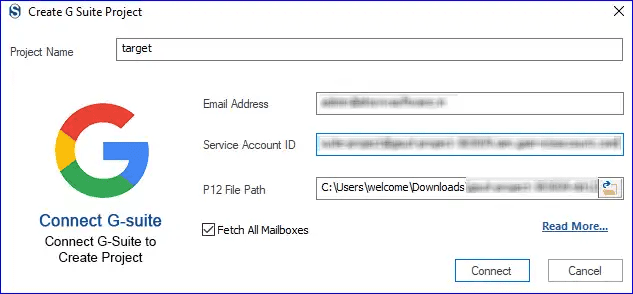
- Provide the project name, email address, and other details. After that, click the Connect button.
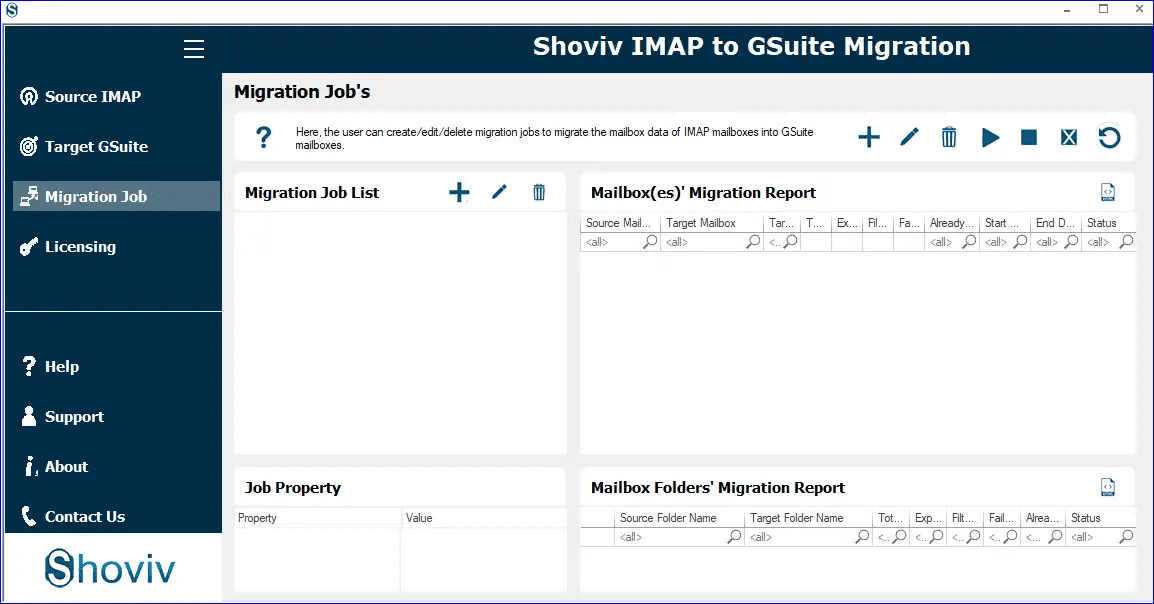
- Then, tap on the Migration Job tab and create a new job by clicking the (+) button.
- Now, you need to enter the Job Name and choose the Source and the Target. Hit the Next to continue.
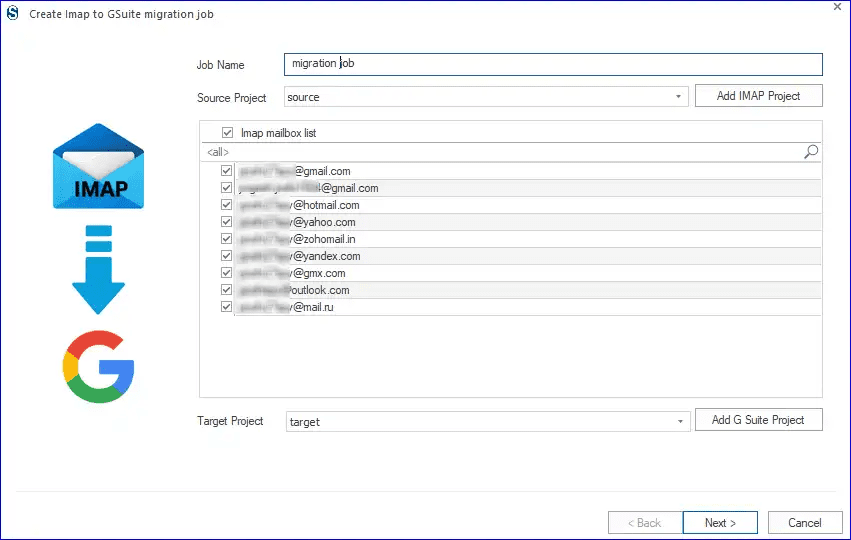
- Then, map the source mailbox to the target, or you can add a CSV file if you have various mailboxes. Move forward with the Next.
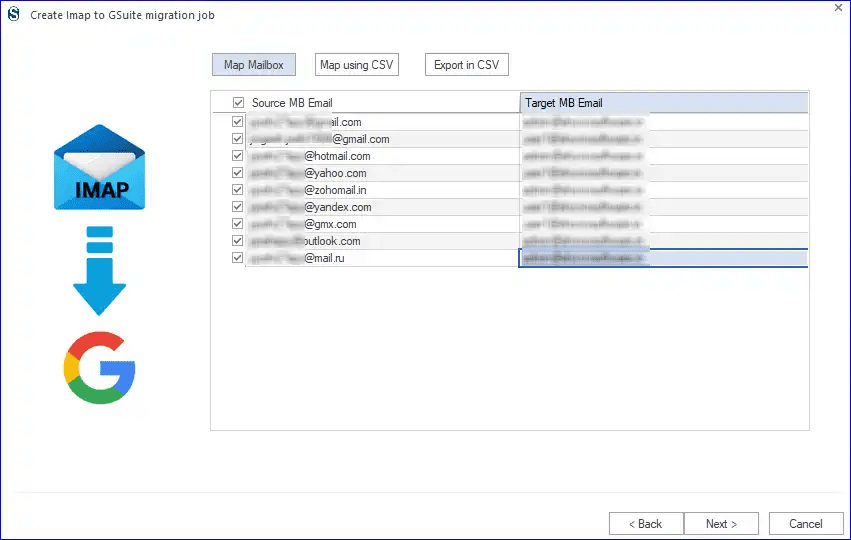
- Select the date range or folder criteria to add or remove items and hit the Next button.
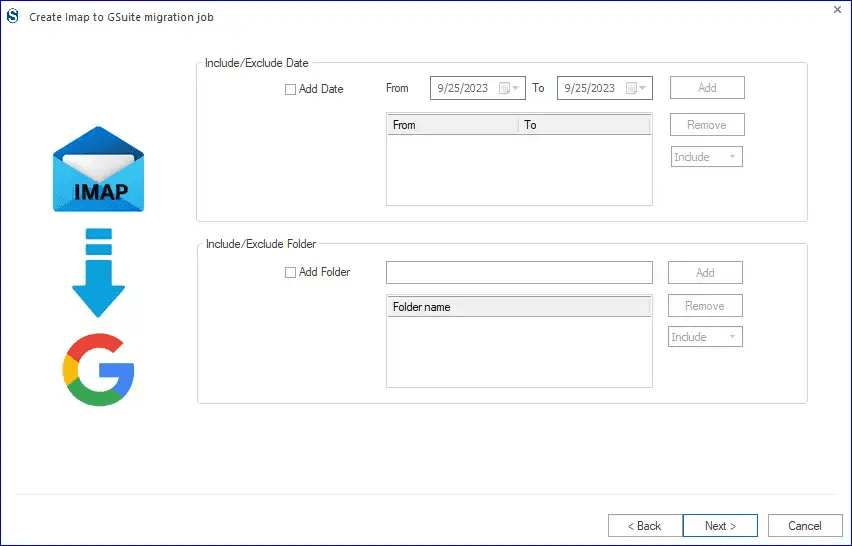
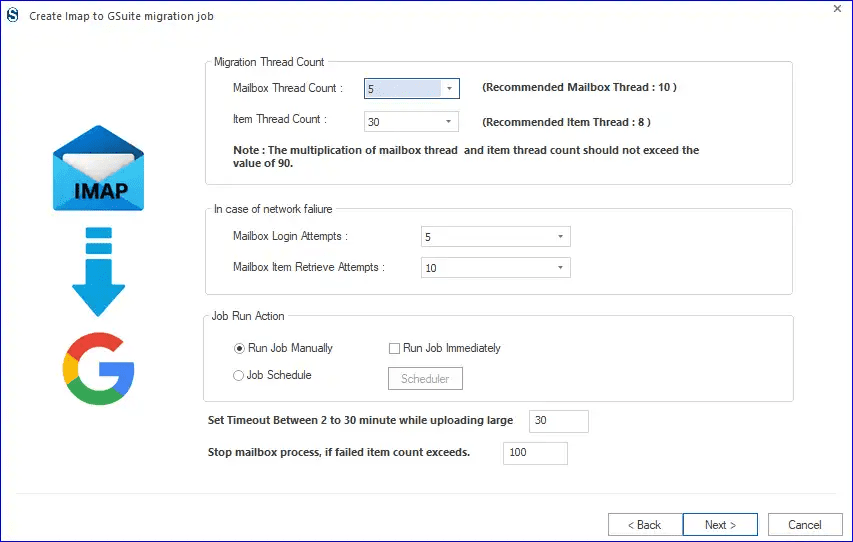
- On the setting page, you have to set the mailbox and item thread count. Make other changes as per the needs and use the scheduler option if required.
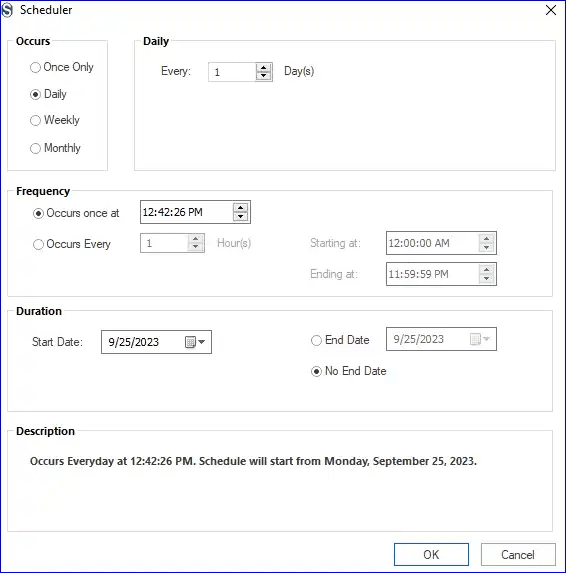
- Here, you can choose the specific date and time to set the migration process periodically. Click OK and then the Next button.
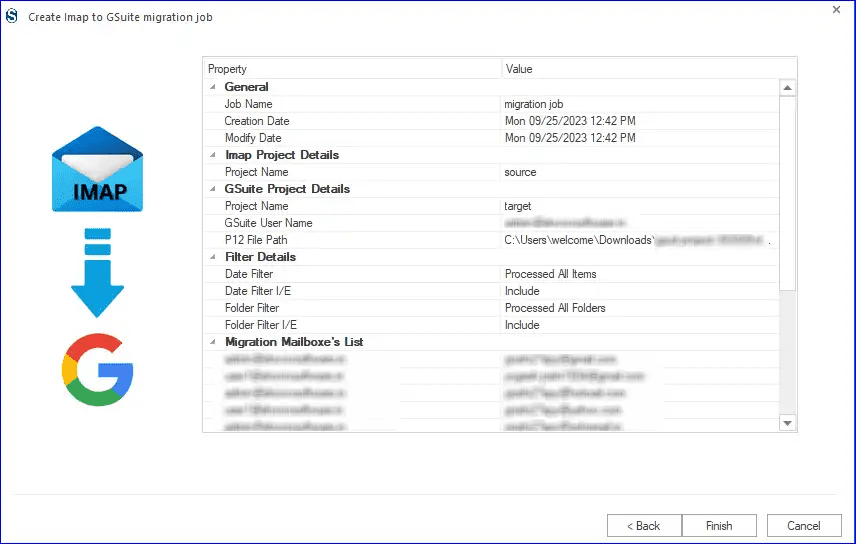
- The review page will open; click the Back button to edit or tap the Finish button to start the process. If a scheduler is not applied or a manual job run is not chosen, the job will run automatically.
That is how you can migrate Gmail to Google Workspace mailboxes. Professionals always prefer to work with automated solutions as they can move lots of emails at once with them. Moreover, users will get various facilities that make the process simple and quick.
Method 2: Upgrade Gmail to Google Workspace via Admin Console
To start the migration with the help of this solution, users need an admin account. Users can follow the below steps to migrate Gmail to Google Workspace mailboxes.
- First of all, sign in to Google Admin Console with the admin account.
- After that, move to the Menu, Account, and click the Data migration option.
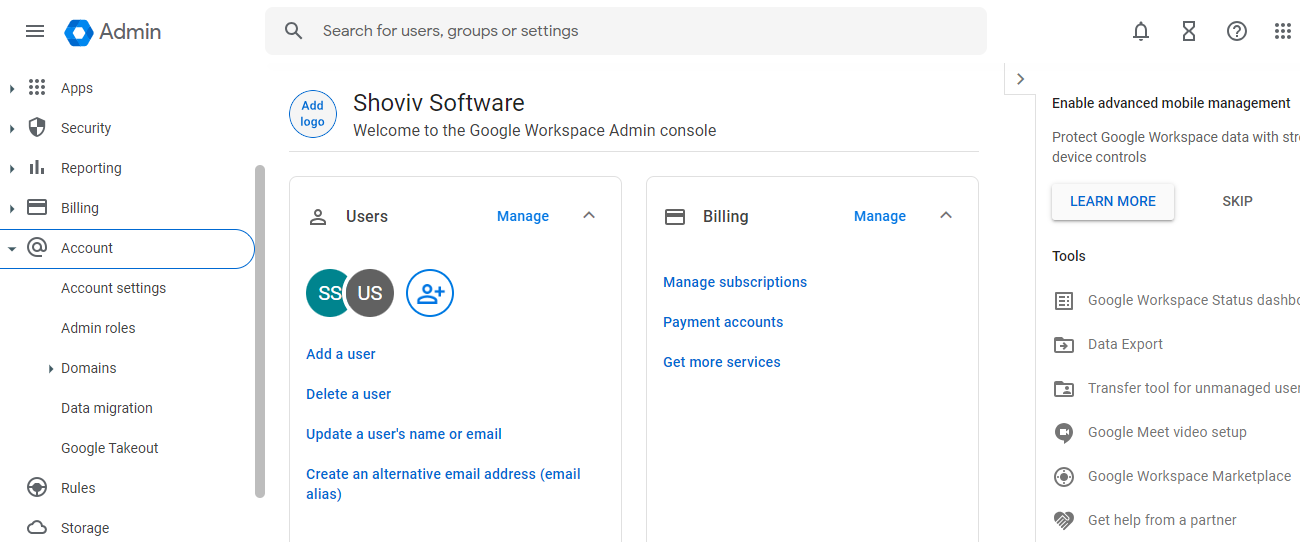
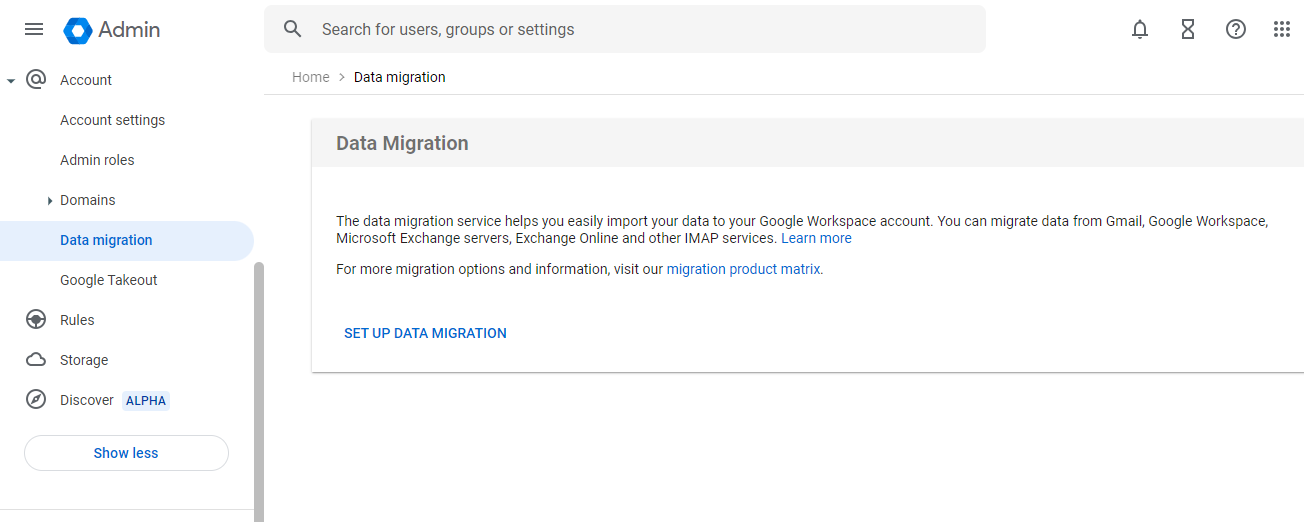
- Now, you need to tap the Set Up Data Migration option.
- Then, select Gmail in the Migration source drop-down.
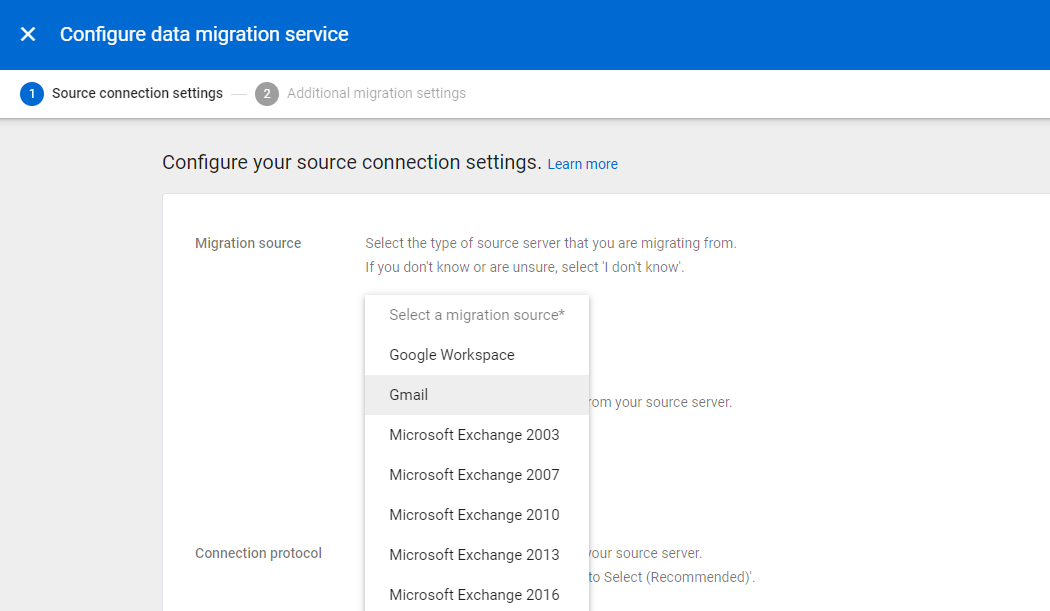
- After that, click the Start button to continue.
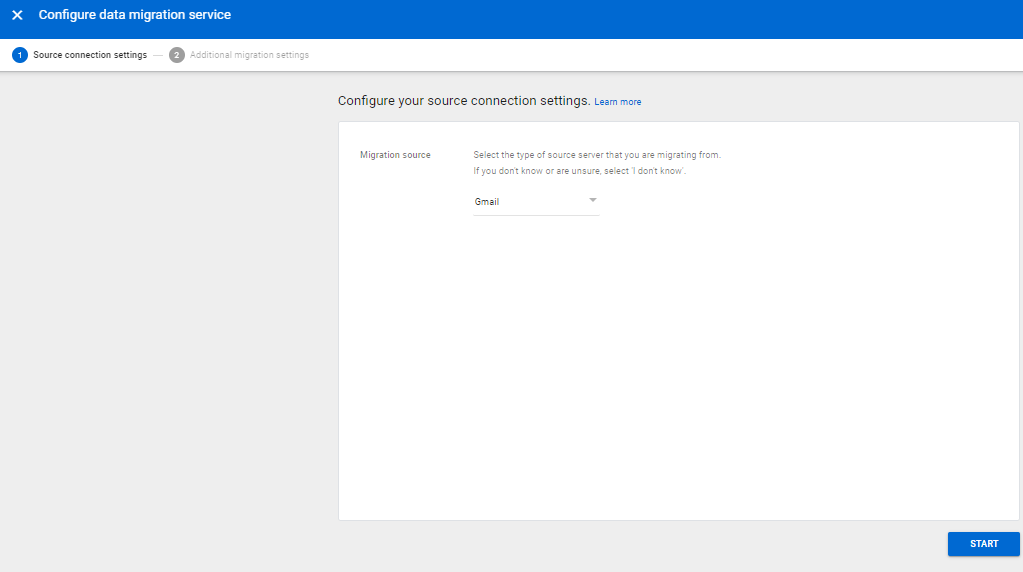
- Select the date to start the migration process if needed.
- You can also remove unnecessary data if required.
- Now, click the Add User option to move forward.
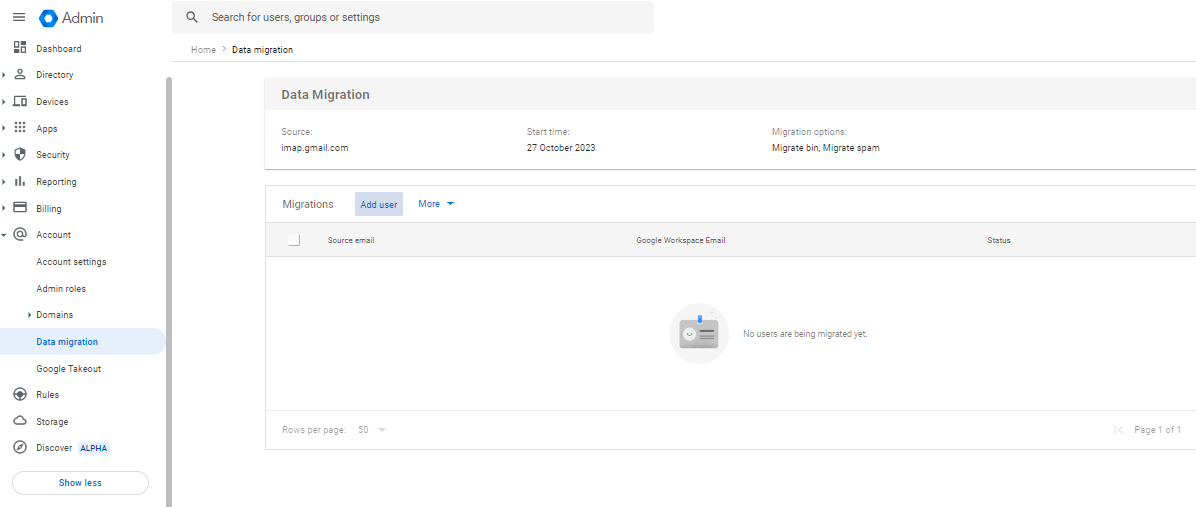
- Enter the Gmail address in the Source email option.
- After that, click the Authorize option.
- The Gmail user will receive a notification for permission; one has to allow the permission to continue with this process.
- Now, provide the Google Workspace email.
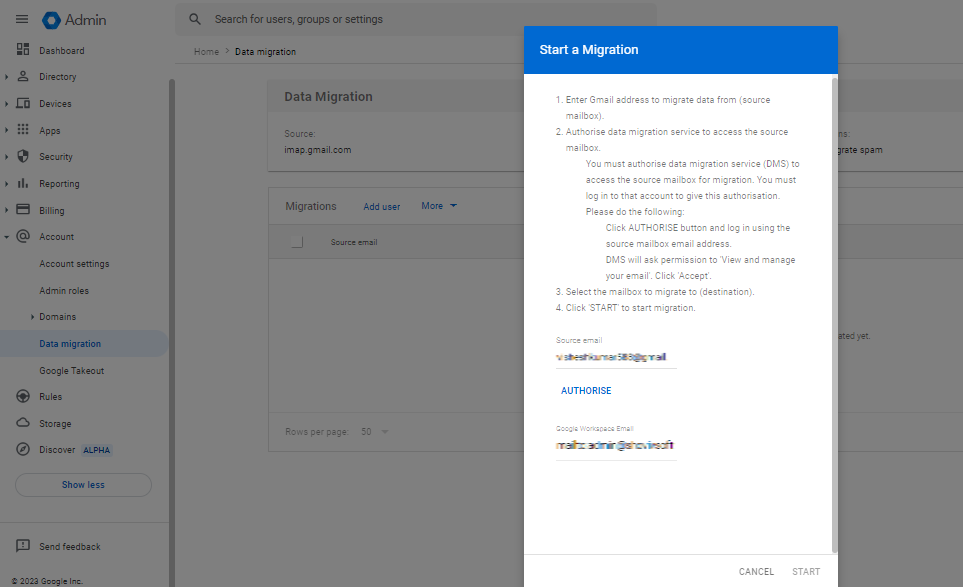
- Then, click the Start button to begin the Gmail to Google Workspace migration task.
- To move other users, repeat the above steps.
That is the complete stepwise procedure to migrate Gmail to Google Workspace accounts manually. Google’s built-in Admin Data Migration Service (DMS) is useful for simple migrations, but it can quickly become limiting when you’re handling large-scale business transfers, tight deadlines, or complex data environments.
That’s where professional migration software makes a huge difference. Compared to native tools or manual migration methods, dedicated solutions offer faster performance, better reliability, and far more control over the entire migration process.
Why Businesses Choose Professional Migration Software
1. Avoiding Google’s Strict Bandwidth Limits
Native migration methods and manual IMAP syncing are restricted by Google’s daily upload and download limits, including the well-known IMAP bandwidth caps.
The advantage of professional tools:
Advanced migration software uses optimized APIs and direct server-to-server transfer methods to move data more efficiently. Many tools can intelligently manage transfer speeds and work around standard throttling limits, making it possible to migrate massive mailboxes—ranging from several gigabytes to multiple terabytes—much faster than traditional methods.
2. Migrating More Than Just Emails
Most native migration tools focus mainly on email data, leaving everything else to be migrated separately.
The advantage of professional tools:
A dedicated migration platform can transfer your entire digital workspace in one streamlined process, including:
- Emails with folder hierarchy and read/unread status preserved
- Google Drive files, permissions, and shared drives
- Calendars, recurring meetings, and attendee information
- Contacts and organization-wide address lists
3. Smarter Data Filtering and Folder Management
Not every old email or file needs to take up storage space in your new business account.
The advantage of professional tools:
Professional migration software gives you full control before the migration even begins. You can:
- Transfer only recent emails (for example, the last 3 years)
- Exclude Spam, Trash, or oversized attachments
- Automatically reorganize or merge folders during migration
This keeps your new environment cleaner, more organized, and easier to manage.
4. Incremental Migration for Zero Downtime
In real business environments, employees can’t stop sending or receiving emails while a migration is happening.
The advantage of professional tools:
Most enterprise-grade solutions support Incremental Migration. This means you can complete the initial bulk migration first, then run a final sync before launch. The software only transfers newly arrived emails and changes, preventing duplicates and allowing users to continue working without interruption.
5. Better Error Handling and Detailed Reporting
When native migrations fail, they often provide very little information about what went wrong.
The advantage of professional tools:
Professional software includes advanced retry systems, error tracking, and detailed audit logs. If a file is corrupted or an email fails to migrate, the system records the exact issue instead of stopping the entire migration process. This makes troubleshooting far easier and helps maintain data accuracy and compliance.
6. Bulk Multi-User Migration
Migrating accounts one at a time becomes extremely time-consuming for larger organizations.
The advantage of professional tools:
Enterprise migration platforms support bulk account mapping through CSV files and allow administrators to migrate hundreds of mailboxes simultaneously from a centralized dashboard. This dramatically reduces manual effort and saves IT teams countless hours.
In short, while Google’s native migration tools may work for small or simple transfers, professional migration software is built for speed, scalability, reliability, and enterprise-level control—especially when business continuity and data integrity matter most.
Ending Words:
Users who are seeking a way to migrate Gmail to Google Workspace mailboxes can use the Shoviv professional solution. It is an effortless way that all users can use to do this migration process. Moreover, it comes with lots of advanced facilities as well. To explore more about this professional tool, users can try out its free trial version. Users can process the first 50 items per folder freely using its free trial version.
Popular Posts:-
- How to Troubleshoot Google Workspace Migration Failure?
- How to Migrate From Outlook to Google Workspace?
- Google Workspace (Gmail for Business) Pricing & Plans (2026)
- Fast and Secure Way to Move Kerio Emails to Google Workspace
- How to Migrate Google Drive to Another Account Effortlessly?
- How to Change Gmail Account Username Without Losing History?